Posted on 3 Responses to

Our American “Empire” with Niall Ferguson

Note: This interview has been picked up by the public radio stations WGBH, in Boston, its affiliates WCAI and WNAN, and WCVE in Richmond, VA. It was originally broadcast in 2008.

In some ways, the Scottish historian Niall Ferguson is the Russell Crowe of the academic world: charismatic, unconventional, and definitely controversial. He’s also a big fan of the British Empire — and wants the United States to follow in its footsteps. That means it’s our job to form colonies in hot climates, for years on end.
But are we up for this? While Niall would like that to be the case, he doesn’t really think so, because, he says, we’re an empire “in denial” …
Click here: to listen to a 4 minute excerpt.
Click here: to listen to the entire interview (15:30 minutes).

And to listen to this interview with Niall Ferguson on the WGBH Forum Network, click here!

Posted on 3 Responses to

Harvard Critic Helen Vendler on Emily Dickinson

Sadly, Helen Vendler has just died on April 23, 2024, at ninety years of age. I’m so glad I got a chance to meet her.

Note: This interview was broadcast on the WGBH sister stations WCAI/WNAN, Prairie Public Radio, WABE in Atlanta and on KUT in Austin, Texas.

Emily DickinsonWhen Helen Vendler was only 13, the future poetry critic and Harvard professor memorized several of Emily Dickinson’s more famous poems. They’ve stayed with her over the years, and today, she talks with ThoughtCast’s Jenny Attiyeh about one poem in particular that’s haunted her all this time. It’s called I cannot live with You-
According to Vendler, who has written the authoritative Dickinson: Selected Poems and Commentaries, it’s a heartbreaking poem of an unresolvable dilemma and ensuing despair.
Click here (18 minutes) to listen!

This interview is the first in a new ThoughtCast series which examines a specific piece of writing — be it a poem, play, novel, short story, work of non-fiction or scrap of papyrus — that’s had a significant influence on the interviewee, that’s shaped and moved them.
Up next – esteemed novelist and short story writer Tom Perrotta discusses Good Country People,  a short story by Flannery O’Connor that’s particularly meaningful to him.

Posted on 3 Responses to

The history and future of the New England Forest

Note: an audio version of this interview was broadcast by the WGBH affiliate WCAI, the Cape and Islands NPR station, and by KPIP in Missouri.

The forests of New England are, remarkably, a success story. They’ve recovered from attack after attack. The early settlers hacked them down, by hand, for houses, fences and firewood. Later on, the insatiable sawmills of a more industrial age ate up the lumber needed for our expansion.
Today, the forests contend with acid rain, invasive plants and exotic beetle infestations — evidence of our ever more global economy. And the future of these forests? Going forward, that’s a story that’s largely ours to shape, and narrate.

If only these trees could talk … Well, we have the next best thing – Donald Pfister, the Dean of Harvard Summer School, curator of the Farlow Library and Herbarium, a fungologist (the more erudite word is mycologist), and the Asa Gray Professor of Systematic Botany at Harvard University.
In this Faculty Insight interview, produced in partnership with ThoughtCast and Harvard Extension School, he tells the tale of the New England forest from as far back as the glacial Pleistocene era.
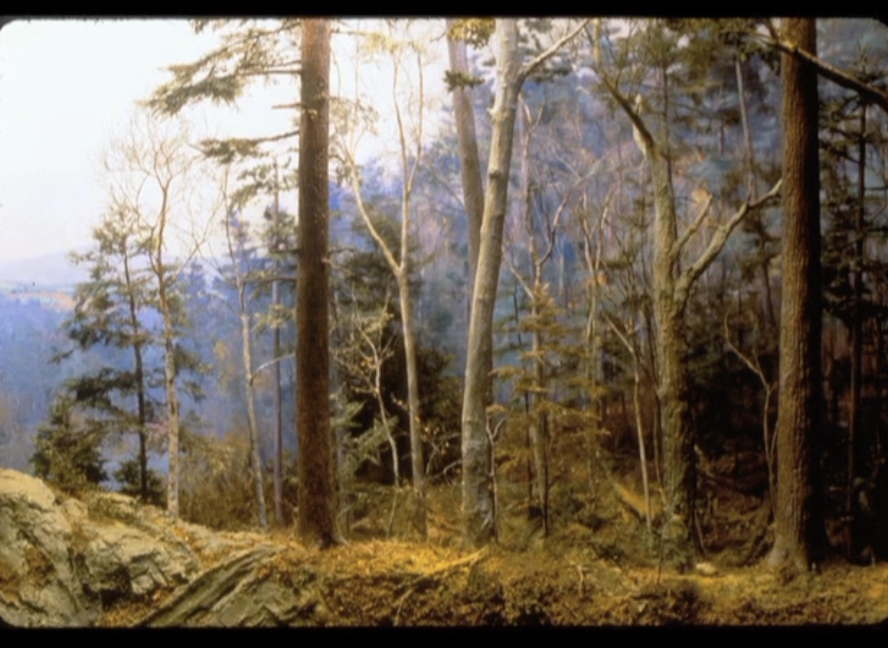
To help illustrate this tale, we’ve made grateful use of high resolution images of some dramatic landscape dioramas, which are on display at Harvard’s Fisher Museum, in Petersham, Massachusetts.
And finally, for an audio version of this story, click here: to listen (9:47 mins).

Posted on 3 Responses to

The Mau Mau rebellion — a revisionist history

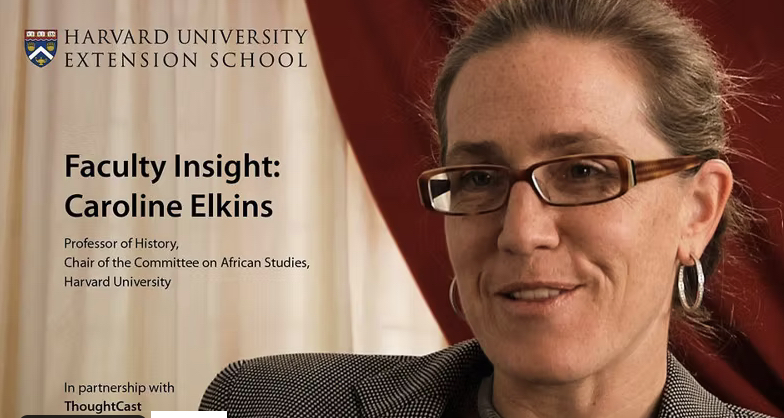
Caroline Elkins

NOTE: Caroline Elkins is in the news again, with a new book called Legacy of Violence: A History of the British Empire. In it she continues her searing research into first world abuse and torture of numberless Africans under their colonial control.

How does history get rewritten? How do victimizers become victims, and the valiant turn into villains? As Harvard history professor Caroline Elkins has learned, this process can be a hazardous one. The Pulitzer prize-winning author of Imperial Reckoning: The Untold Story of Britain’s Gulag in Kenya devoted many years to the study of the Mau Mau uprising in the early 1950s, and the British response,  a model of counter-insurgency technique — or so she thought.

The Mau Mau were a group of native Kenyans who turned to violence and terror to drive out their colonial British masters, but as Elkins discovered, they weren’t the only ones to use such tactics.  Now a court case will decide where the truth actually lies, as you will hear in this Faculty Insight interview, produced in partnership with ThoughtCast and  Harvard Extension School.

For an audio version of this story, click here: to listen. (6:50 mins).

Posted on 3 Responses to

Alan Dershowitz on Preemption and the Hezbollah

Dershowitz Back in the Spotlight

Note: this interview was broadcast twice on WGBH radio in Boston.
It has also aired on WCAI/WNAN, WNED, KXOT and KYOU.

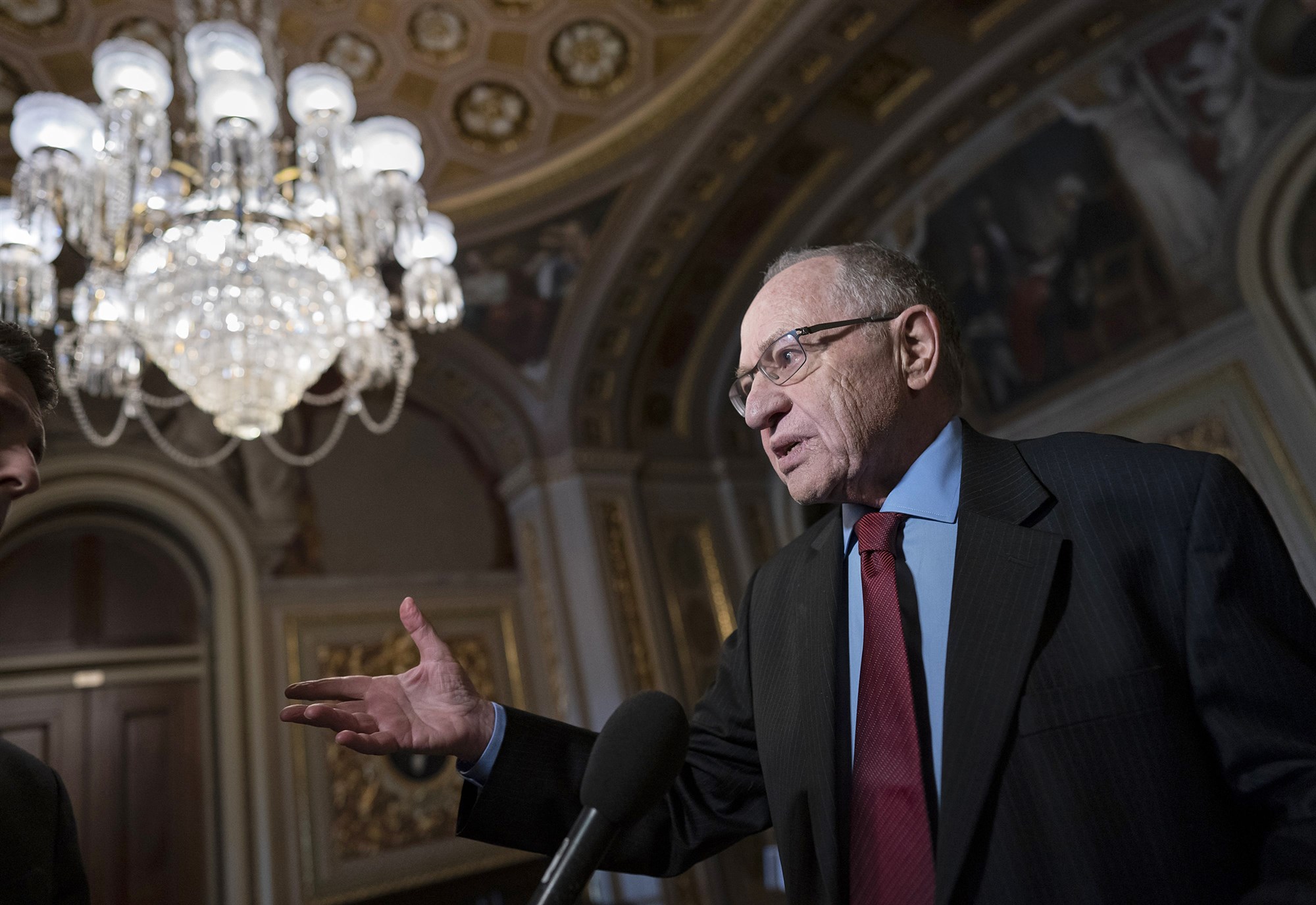
The controversial Harvard Law professor, author and celebrity lawyer Alan Dershowitz talks with ThoughtCast about his book “Preemption: A Knife That Cuts Both Ways”, as well as his views on the Israeli-Palestinian-Hezbollah conflict, torture, human rights and our ‘war on terror.’ His premise: the world has changed, and international law must change with it. We need more tools, he argues, in the fight against terror networks whose recruits hold no fear of death or retribution.

Note: Although the subjects we discuss are controversial, my goal is not to argue with Alan, but to find out what he’s thinking. My hope is that our conversation will provoke further discussion on these hot-button issues.

Click here: (30 minutes) to listen to the interview.

Click here: to listen to the hour-long version.


Posted on 3 Responses to

Samuel Huntington — on Immigration and the American Identity

The remarkable rise of Donald Trump, fueled in large part by his determination to keep immigrants out of his Greatening America, has caused many to re-examine the key concerns of the controversial political scientist Samuel Huntington. His writings on immigration and American national identity seem today to be sad prophecies of what has come to pass. In light of last year’s headlines — extreme vetting for Syrian refugees, Presidential dithering on DACA, white nationalist riots — I decided to re-post my 2005 ThoughtCast interview with Huntington, who died in late December, 2008.

Note: This interview was broadcast twice on WGBH in Boston.
The eminent and provocative political scientist and prolific author, talks with ThoughtCast about what he sees as the threat to America’s national identity (and its founding ‘Anglo-Protestant’ culture) posed by large numbers of unassimilated Hispanics, legal or otherwise, living in the United States. His most recent book: “Who Are We? The Challenges to America’s National Identity” has caused quite a stir. Huntington is also famous for an earlier work called “The Clash of Civilizations.” In this book, he argues that civilizations, not nations or ideologies, form the basic building blocks of future cooperation — and conflict.
Huntington, a longtime professor of political science at Harvard, is also a member of the editorial board of a new magazine chaired by Huntington’s former student, Francis Fukuyama, called “The American Interest.”
We discuss these topics in a half-hour interview while seated in the back yard of his home on Martha’s Vineyard — hence all those birds chirping away cheerily…

Click here: to listen (30 mins).